Table Of Content

Experiments can be conducted in an artificial or laboratory setting such as at a university (laboratory experiments) or in field settings such as in an organisation where the phenomenon of interest is actually occurring (field experiments). Laboratory experiments allow the researcher to isolate the variables of interest and control for extraneous variables, which may not be possible in field experiments. Hence, inferences drawn from laboratory experiments tend to be stronger in internal validity, but those from field experiments tend to be stronger in external validity. Furthermore, if the research does not identify ex ante relevant extraneous variables and control for such variables, such lack of controls may hurt internal validity and may lead to spurious correlations.
Step 5: Plan your data collection procedures
This would involve diving deeply into the organisation to explore and understand what makes it tick – from marketing to HR to finance. In terms of data collection, this could include interviews with staff and management, review of policy documents and financial statements, surveying customers, etc. With case study research design, you, as the researcher, investigate a single individual (or a single group of individuals) to gain an in-depth understanding of their experiences, behaviours or outcomes. Unlike other research designs that are aimed at larger sample sizes, case studies offer a deep dive into the specific circumstances surrounding a person, group of people, event or phenomenon, generally within a bounded setting or context. Deep learning methods, trained on the increasing set of available protein 3D structures and sequences, have substantially impacted the protein modeling and design field. These advancements have facilitated the creation of novel proteins, or the optimization of existing ones designed for specific functions, such as binding a target protein.
We have one of London's biggest and best university campuses with everything you need in one place.
This iterative process will be repeated until the coding scheme is fully developed. The coders will independently code all transcripts, and any coding discrepancies will be resolved via discussion. Once coding is complete, synthesis of content will begin by organizing codes under broader domains (meta-codes) as well as sub-codes.
Ecologic study
The purpose of a historical research design is to collect, verify, and synthesize evidence from the past to establish facts that defend or refute a hypothesis. It uses secondary sources and a variety of primary documentary evidence, such as, diaries, official records, reports, archives, and non-textual information [maps, pictures, audio and visual recordings]. If you're working on a research project, you'll definitely want to check this out... One of the reasons students struggle with a clear definition of research design is because the term is used very loosely across the internet, and even within academia.
Randomization is a well‐established methodology adopted in research to prevent bias due to subject selection, which may impact the result of the intervention/experiment being studied. It is one of the fundamental principles of an experimental study designs and ensures scientific validity. It provides a way to avoid predicting which subjects are assigned to a certain group and therefore, prevent bias on the final results due to subject selection.
As such, Medicaid programs have great potential to implement structural interventions to advance racial equity in healthcare and health outcomes during pregnancy and postpartum [10]. Historically, Medicaid policies have promoted equality, that is, providing equal benefits to all regardless of the distribution of need [11]. An equity-focused policy approach, however, will direct resources toward improving health and well-being among those with the greatest need [12]. Unfortunately, a vast body of research conducted among Medicaid-enrolled populations shows that healthcare systems do not provide the same quality of obstetric care to Black people and other people of color, relative to white people [13,14,15,16,17,18].
The interviewer will describe study objectives to each participant, obtain consent, and each interview will be audio-recorded and the interviewer will take notes throughout. Interview audio recordings will be transcribed verbatim, and transcripts spot-checked against the audio recordings for accuracy. The audio recording files will then be deleted to protect confidentiality of participants.
Social Science Research: Principles, Methods and Practices (Revised edition)
We will also use Medicaid administrative data to identify providers who serve Black beneficiaries and invite them to participate. We will aim to interview at least 20 obstetric and pediatric healthcare professionals to elucidate their perspectives on how structural racism in medicine affects patient outcomes, and the types of Medicaid policy changes that should be implemented. Ethnography is an interpretive research design inspired by anthropology that emphasises that research phenomenon must be studied within the context of its culture. The researcher is deeply immersed in a certain culture over an extended period of time—eight months to two years—and during that period, engages, observes, and records the daily life of the studied culture, and theorises about the evolution and behaviours in that culture.
Applied Research and Methods (ARM) U.S. GAO - Government Accountability Office
Applied Research and Methods (ARM) U.S. GAO.
Posted: Wed, 08 Jun 2022 17:39:25 GMT [source]
Medicaid policy interventions
Hence, the subjects with disease are likely to remember the presence of risk factors compared to the subjects without disease. Action research assumes that complex social phenomena are best understood by introducing interventions or ‘actions’ into those phenomena and observing the effects of those actions. In this method, the researcher is embedded within a social context such as an organisation and initiates an action—such as new organisational procedures or new technologies—in response to a real problem such as declining profitability or operational bottlenecks. The researcher’s choice of actions must be based on theory, which should explain why and how such actions may cause the desired change. The researcher then observes the results of that action, modifying it as necessary, while simultaneously learning from the action and generating theoretical insights about the target problem and interventions. The initial theory is validated by the extent to which the chosen action successfully solves the target problem.
A good research design serves as the blueprint for how you, as the researcher, will collect and analyse data while ensuring consistency, reliability and validity throughout your study. If you’re not sure which methods will work best for your research design, try reading some papers in your field to see what data collection methods they used. Within both qualitative and quantitative approaches, there are several types of research design to choose from. Quantitative research designs tend to be more fixed and deductive, with variables and hypotheses clearly defined in advance of data collection.
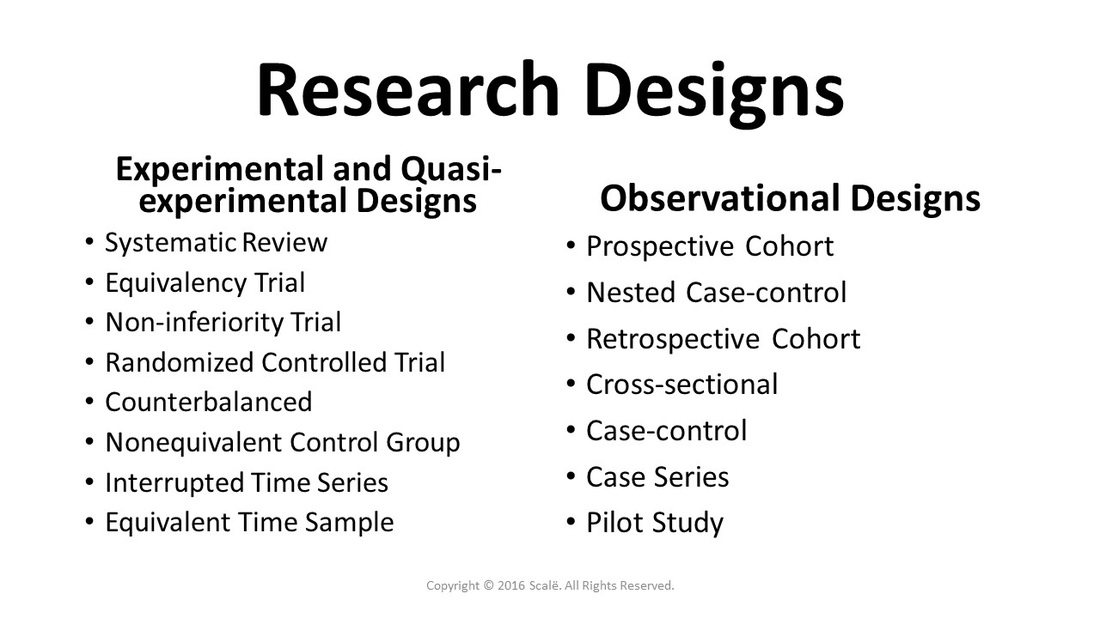
Each study design is different, and so it would be important to choose a design that would most appropriately answer the question in mind and provide the most valuable information. As noted earlier, research designs can be classified into two categories—positivist and interpretive—depending on the goal of the research. Positivist designs are meant for theory testing, while interpretive designs are meant for theory building. Positivist designs seek generalised patterns based on an objective view of reality, while interpretive designs seek subjective interpretations of social phenomena from the perspectives of the subjects involved.
Our graduates are employed across the design industry, from high profile organisations such as Apple, Tesla and Lego, through to London-based design consultancies, government organisations, and start ups. Graduates enter employment taking up positions including industrial designer, product designer, service designer, interaction designer, UX/UI designer, designer/craftsperson, creative technologist, and more. This module develops your design research, strategic planning, theoretical background and contextual and commercial framework for your Final Major Project and your personal practice. You will prepare and publish a range of technical and contextual texts, and a professional and personal reflection upon your project work. Sat within the Faculty of Science and Technology, we strive to develop product designers who are creative, confident, responsible and insightful in responding to user needs, but who also have a fundamental understanding of how to design and make things that work. From the 1980s until relatively recently, most national polling organizations conducted surveys by telephone, relying on live interviewers to call randomly selected Americans across the country.


No comments:
Post a Comment